
RTA And Assembled Cabinet Comparison in Prince Frederick
Compare assembly requirements alongside cabinet construction and order details.
Send my cabinet inquiry
Or call (562) 203-3232. Calls only, we do not receive text messages.

Choosing RTA or assembled cabinets in Prince Frederick means comparing a product and a set of remaining tasks. Calvert Cabinet Field provides independent guidance to make both visible. Ask what the offered units include, how they arrive and who handles the work afterward, while keeping storage goals and the cabinet schedule consistent enough to understand the alternatives.
- Independent buying guidance
- Product inquiries
- Seller availability confirmed separately
Buying questions: rta and assembled cabinet buying
The site does not stock products or perform assembly, installation or transport. Submitted details form a record for the site owner to review, with no automatic seller forwarding and no guaranteed response. Obtain the actual manufacturer instructions and seller terms before relying on a format label to decide what the purchase will require.
About Calvert Cabinet Field
Know who handles each part
Independent cabinet buying information and quote-request service. We do not manufacture, stock or install cabinets. A referral, supplier response, appointment or purchase is not guaranteed. Product availability, delivery and installation must be confirmed directly with the seller or separately engaged contractor.
Hold the storage requirement steady across named products
Start with the intended units, quantities, configurations and finish. Ask each seller to name the line and product codes it is offering. RTA, meaning ready to assemble, describes a format but does not identify every component or performance characteristic of the proposed goods.
If the assembled and RTA options use different lines, state that difference. You are comparing actual combinations of product and format. A drawer unit changed to a door cabinet affects the storage function as well as the price; it should not be hidden inside a claim that the options are equivalent.
Consider a hypothetical buyer who needs a pantry with a particular internal storage feature. Keep that function in both requests, then record whether each proposed product actually offers it. If one omits the accessory, show it as a different scope. A format comparison is most useful when the buyer can explain which requirements stay fixed and which goods or tasks change, rather than ranking every product category from a single label.
Use manufacturer instructions to define the assembly task
Request instructions for the exact units under consideration. Ask what parts are supplied and what tools, inputs or separate items the documents require. Instructions for another product may show a general idea, but they cannot establish the task for the proposed line.
If someone else will assemble the units, ask that person to review the instructions before defining its scope. Identify whether it checks supplied components, assembles all unit types and fits the specified accessories. Keep installation separate unless the actual agreement explicitly covers it.
The IKEA Malaysian kitchen buying guide in the source bank discusses packaging and planning for installation and delivery conditions. It supports a planning habit in its own product context, not a Maryland service offer or universal assembly method. Obtain the applicable information from the proposed seller and manufacturer. In the hypothetical pantry comparison, the accessory instructions may matter alongside the box assembly. A finished-looking cabinet should not be assumed to include every selected internal part fitted and ready for use unless the seller states that.

Count the packages and review the workspace
Ask for package counts and dimensions tied to the actual schedule. Identify how accessories and related panels are packaged or referenced. A list of final cabinets is not a complete description of what must be received and handled.
Describe the actual route, storage area and proposed assembly space, then have the responsible people compare them with the manufacturer's information. Mark unmeasured conditions unresolved. Do not infer storage suitability from a locality name or assume compact packaging can be kept anywhere.
A hypothetical purchaser could have space for cartons but need to arrange a workspace before assembly. An assembled alternative could avoid that task while requiring a different handling plan. Both need their own assessment. Ask the seller to define the receiving handoff and clarify who moves goods beyond it. The decision should reflect the real property and people involved rather than a general statement that one format is always easier to manage.
Establish a path for incomplete or damaged goods
Ask the seller for its written instructions for shortages, visible damage and issues found after receipt. Identify who reports the problem, what information is required and which deadlines or conditions apply. No universal remedy or reporting window is established by this guide.
Give the receiver the current order and applicable instructions. Agree on how package labels, counts and visible discrepancies will be recorded. If a separate assembler later finds a component issue, establish how that information reaches the purchaser and seller.
For the hypothetical pantry order, a complete carton count might coexist with an unresolved accessory part question. Those checks concern different things. Ask the seller how it wants the issue documented rather than assuming the package count proves every component is present. An assembled order also needs its applicable inspection process. Keep records attached to the actual order and avoid promising that documentation alone guarantees a replacement or another remedy. The terms and facts need to be evaluated by the responsible parties.
Compare price after assigning the remaining work
Check quantities, box configurations, finish, panels and accessories first. Then identify assembly, freight, pickup, carrying and storage charges where relevant. External labor for installation or other work needs the provider's own defined scope. A product subtotal cannot establish the complete cost when remaining tasks are unpriced.
Show the responsibilities beside the amounts. One hypothetical offer could price assembly while another expects the buyer to arrange it. Record the difference and obtain actual terms for the outside task before declaring the lower product total a lower overall cost.
The FTC recommends written estimates identifying scope, materials and price for home improvement work; use that discipline when comparing external assembly or installation arrangements. Early estimates may change, and the final written quote should establish the actual offered price and inclusions. If a task or charge is unanswered, retain it as unknown. A fair format decision weighs the goods, work and handling arrangement together rather than assuming the format with a smaller product subtotal will necessarily cost less for the complete purchase.
Check evidence for the line and preserve the chosen alternative
If performance certification matters, ask for documentation for the exact proposed line. KCMA identifies a kitchen and vanity performance and construction standard, ANSI/KCMA A161.1. That establishes a reference standard, not certification for an unidentified product or this site. Assembly format is a separate subject.
Keep the accepted schedule, product descriptions, applicable instructions and seller terms together. Name the purchaser, assembler if required, receiver and final fit approver. Ask each provider to state its actual responsibility rather than expecting the group to coordinate automatically.
Revisit the comparison if the line or format changes. Included accessories, package data, instructions and finish may no longer match the original offer. Record those changes as a new alternative or revision. Before ordering, ensure the accepted goods and remaining work can be described in one coherent record. An inquiry can gather the questions while they are unresolved; the actual purchase needs the product evidence and commitments that answer them.
Inquiry process
From buying questions to a possible supplier quote
Sending an inquiry does not reserve products or book work.
Describe the purchase
Include project ZIP, room, approximate cabinet list and preferred timing.
Clarify requirements
Identify assembly, access, measurements and any separately arranged labor.
Confirm referral availability
An inquiry can be referred only if a suitable seller accepts the location and product request.
Review seller terms
Confirm the final drawing, itemized price, payment, delivery and return terms directly before ordering.
Illustrative product choices
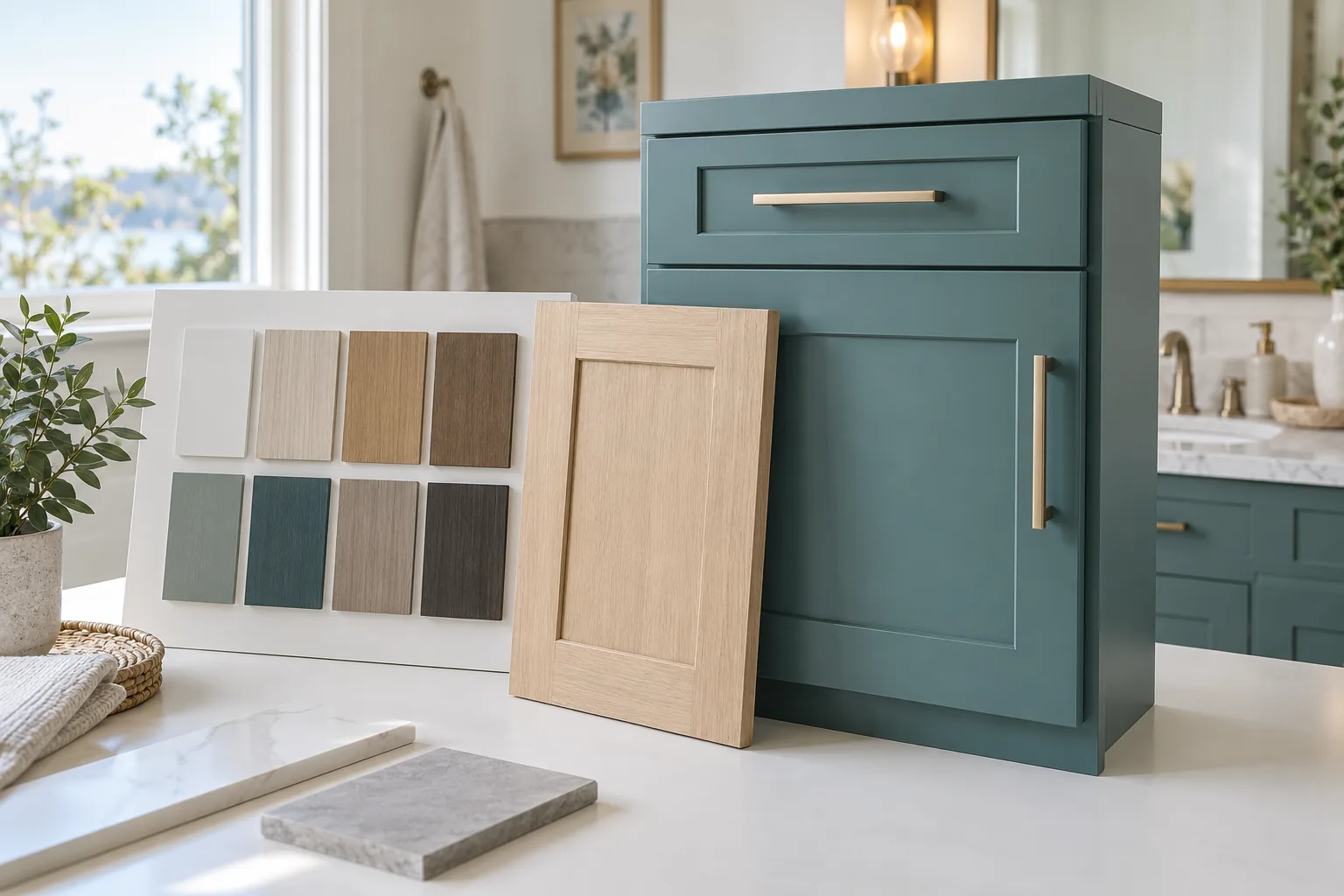
Illustrative product visualizations, not completed work, local properties or supplier facilities.
Questions
RTA and Assembled Cabinet Buying: Common Questions
Can I compare RTA and assembled offers from different lines?
Yes, but identify the line differences openly and check the storage function, configurations and accessories. You are comparing product-and-format combinations, not isolating format alone. Similar appearance or cabinet count does not establish equivalent goods.
What should an external assembler review before quoting work?
Provide the exact manufacturer instructions and product schedule, including accessories. Ask the assembler to state which checks and assembly steps it includes and which tasks remain separate. Instructions for an unrelated cabinet should not define the agreement.
Does an assembled label include carrying into my kitchen?
No handoff is established by the label alone. Ask the actual seller where its offered receiving responsibility ends and who handles further movement. Have the responsible people assess package information against the actual route and storage location.
Is format enough to establish product quality or certification?
No. Read evidence for the named product and request applicable certification documentation if that matters to you. The existence of a performance standard and the choice of assembly format are different facts; neither certifies an unknown proposal by itself.
Talk to us about rta and assembled cabinet buying
Describe the purchase and project ZIP in Prince Frederick. Supplier acceptance and any referral are confirmed separately; no visit or quote is booked by this form.
Calls only, we do not receive text messages.