
Kitchen Cabinet Quote Comparison in Prince Frederick
Prepare a cabinet list and compare what each kitchen quote includes.
Send my cabinet inquiry
Or call (562) 203-3232. Calls only, we do not receive text messages.

Two kitchen cabinet totals are comparable only when you can explain the goods behind them. For Prince Frederick buyers, Calvert Cabinet Field provides independent guidance on preparing a traceable product list and checking what each seller actually proposes. Put the units, finish and related pieces in the request first, then identify alternatives and the assumptions that still need review.
- Independent buying guidance
- Product inquiries
- Seller availability confirmed separately
Buying questions: kitchen cabinet quote comparison
A proposal can be useful before every choice is final if it clearly states its basis. Your submitted form details are recorded for the site owner to review, without automatic seller forwarding or a guaranteed response. Use this guide to organize the comparison; an actual seller agreement and assigned final measurement review are required before purchase.
About Calvert Cabinet Field
Know who handles each part
Independent cabinet buying information and quote-request service. We do not manufacture, stock or install cabinets. A referral, supplier response, appointment or purchase is not guaranteed. Product availability, delivery and installation must be confirmed directly with the seller or separately engaged contractor.
Give every requested unit a traceable reference
Label the intended units on a sketch and use those labels in the product list. For each reference, state cabinet type, quantity, dimensions, configuration and finish. Add the actual seller product code when a line is proposed. Your labels connect the documents; the seller's codes identify its particular products.
Indicate whether a dimension is verified or provisional. Identify the party responsible for the final check. Do not let a blank field become a guessed size that later appears authoritative simply because it sits in a neat schedule.
Consider a hypothetical kitchen inquiry with a pantry, a sink base and several drawer units. The first list may define the storage functions while leaving one width unresolved. Ask for a preliminary proposal with that assumption identified, or resolve the dimension first. The important distinction is whether a row describes a checked requirement or an option being explored. A seller can then explain its offered product rather than silently guessing what the buyer has approved.
List visible ends and related pieces as actual scope
Read the proposed arrangement for exposed sides, finished backs and transition pieces. Identify panels, fillers, toe kicks, trim and accessories as separate rows or clearly stated inclusions. An illustration showing a finished room does not prove those pieces appear in the product total.
For the hypothetical pantry, note whether its side is visible and ask how the selected line handles that finish. For an island, record any intended finished back and the associated storage units. Avoid assigning filler dimensions before the responsible party has reviewed the room and product arrangement.
Check that the list accounts for the intended function as well as the box count. A trash accessory or pantry organizer may be separately offered even when the base cabinet is included. If one proposal omits it, identify that as a scope difference. Handles, pulls and other selected pieces should also be named as included, separately purchased or unresolved. The comparison becomes clearer when every intended item has a visible place in the request.
Attach the actual appliance and sink inputs
Identify retained and selected appliances by model and supply their available specifications. The IKEA US planning reference asks buyers to bring room measurements and dimensions of retained appliances. Use those inputs alongside the unit list so the proposed arrangement can be reviewed against the actual room and equipment.
Connect the sink information to the intended sink base. Mark an undecided appliance or sink as undecided, with any preliminary assumption stated. If a selection changes, ask for the affected cabinet rows and opening relationships to be reviewed again.
Do not treat general labels as final fit evidence. The responsible parties need the relevant product information and checked property conditions. This site does not field measure or approve the order dimensions. Establish who verifies the room, who reviews compatibility and who signs off on the final schedule under the actual arrangements. When a proposal is conditional on buyer-supplied dimensions, understand that condition before accepting it instead of assuming the seller has independently checked every input.
Compare named alternatives without erasing their differences
Ask a seller to state the manufacturer or line, door style, finish and offered construction options. Read the product information for the actual proposal. Similar looking doors and broad material descriptions do not establish that two lines provide identical components or options.
If performance certification matters, request evidence for the proposed line. KCMA describes ANSI/KCMA A161.1 as a performance and construction standard for kitchen and vanity cabinets. That reference alone does not establish certification of an unknown product or of this site. The evidence must apply to the goods being considered.
For the hypothetical pantry, you might compare an accessory-equipped option with another configuration. Give each alternative a name and list what changes: product rows, accessories, finish or assembly format. Consider whether each still serves the storage goal. A lower total may reflect a sensible tradeoff, but the buyer should be able to describe that tradeoff rather than calling unlike goods equivalent. Keep the original schedule available as the common reference for the comparison.

Read quote price with the exclusions beside it
Begin with cabinet quantities and box configurations, then inspect finish, panels, trim and accessories. Ask for a breakdown that connects the total to the stated goods. Identify whether an alternative is included in the main total or priced separately, and make sure the comparison uses the same scope.
Freight, pickup, carrying, assembly and storage need distinct entries when relevant. External labor for removal, installation or associated trades belongs to its provider agreement. If additional work is offered, have its actual scope stated rather than inferring it from the phrase kitchen quote.
A hypothetical lower proposal may omit a finished pantry side or price a different handoff. Reconcile those differences before interpreting the totals. The FTC recommends written estimates with scope, materials and price for home improvement work, which is useful for separately engaged labor comparisons. Preliminary estimates are subject to change, and the final written quote should establish the offered price and inclusions. A charge or item that is not addressed remains unknown until clarified; it cannot honestly be counted as included or free.
Reconcile the accepted revision in both directions
Date the schedule and drawing and assign a revision reference. Ask each proposal to identify the version it uses. When the pantry or appliance selection changes, record the affected rows and issue an updated list. Preserve the earlier documents so you can explain the reason for a later total.
Check from the drawing to the proposal: every intended unit and related piece should be accounted for. Then check from the proposal to the drawing: every listed product should have an explained location or purpose. Review substitutions for size, configuration, finish and accessories before the authorized party approves them.
Before order approval, keep the final schedule, checked inputs and written quote together. Identify the purchaser and final measurement approver, confirm the receiving destination and review actual seller terms for changes and discrepancies. Resolve contradictions between documents before accepting the order. The inquiry is a starting record for discussion; the purchase should be based on one coherent set of accepted goods and commitments rather than the most attractive number from a superseded version.
Inquiry process
From buying questions to a possible supplier quote
Sending an inquiry does not reserve products or book work.
Describe the purchase
Include project ZIP, room, approximate cabinet list and preferred timing.
Clarify requirements
Identify assembly, access, measurements and any separately arranged labor.
Confirm referral availability
An inquiry can be referred only if a suitable seller accepts the location and product request.
Review seller terms
Confirm the final drawing, itemized price, payment, delivery and return terms directly before ordering.
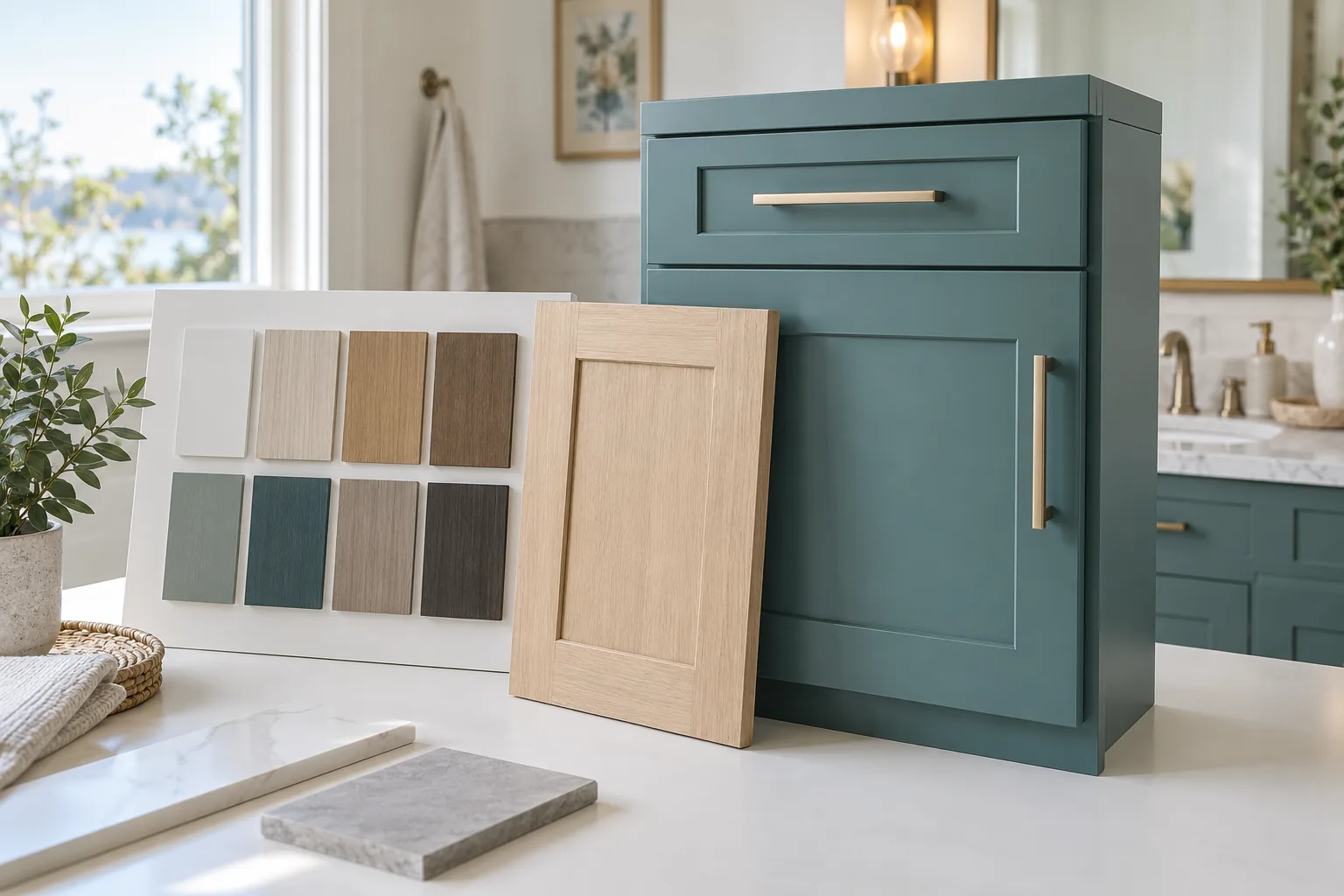
Illustrative product choices
Illustrative product visualizations, not completed work, local properties or supplier facilities.
Questions
Kitchen Cabinet Quote Comparison: Common Questions
Can a preliminary quote include an unresolved dimension?
It can identify a stated assumption, but that is not approval to order from it. Mark the affected unit and establish who will verify the final dimension. Recheck the proposal once the actual input is confirmed so the accepted goods match the room.
How should I compare an accessory as an alternate?
Keep the underlying unit schedule clear and name the alternative separately. Identify which accessories or configurations change and whether their price is in the main total. Compare the storage tradeoff openly instead of treating different inclusions as identical scope.
Does mention of a KCMA standard prove the proposed cabinets are certified?
No. Ask for evidence tied to the actual manufacturer and product line. The source establishes a performance and construction standard, not certification of an unnamed proposal or this website. Review the exact documentation before relying on that distinction.
What should I do when a revised drawing and quote disagree?
Identify the conflicting units or inclusions and ask for corrected documents using the same revision basis. Keep earlier versions for reference, but do not approve the purchase until the accepted drawing, schedule and written terms describe one coherent order.
Talk to us about kitchen cabinet quote comparison
Describe the purchase and project ZIP in Prince Frederick. Supplier acceptance and any referral are confirmed separately; no visit or quote is booked by this form.
Calls only, we do not receive text messages.