
Contractor Cabinet Package Inquiry in Prince Frederick
Put quantities and project requirements into a cabinet package brief.
Send my cabinet inquiry
Or call (562) 203-3232. Calls only, we do not receive text messages.
A Prince Frederick cabinet package should explain how its total quantity was built. Calvert Cabinet Field provides independent procurement guidance for buyers organizing multiple rooms, repeated layouts or purchasing phases. Start with room-type schedules and clear approval roles, so a seller can evaluate identified goods instead of an unexplained package total.
- Independent buying guidance
- Product inquiries
- Seller availability confirmed separately
Buying questions: contractor and property cabinet packages
The inquiry concerns material purchasing; it does not promise a performing crew, trade discount or seller account. Submitted details are recorded for the site owner to review, without automatic seller forwarding or a guaranteed response. Use the method below to distinguish planned quantities from approved releases and obtain actual acceptance and terms from a prospective seller.
About Calvert Cabinet Field
Know who handles each part
Independent cabinet buying information and quote-request service. We do not manufacture, stock or install cabinets. A referral, supplier response, appointment or purchase is not guaranteed. Product availability, delivery and installation must be confirmed directly with the seller or separately engaged contractor.
Calculate the takeoff from each distinct room schedule
Give each distinct arrangement a room-type identifier. List its cabinet units, dimensions, configurations, finish and accessories, with panels, fillers and trim included as traceable entries. Then state how many instances of that arrangement are currently planned.
Keep the room schedule and project summary separate but connected. A reviewer should be able to trace each total quantity back to the rooms that generate it. When similar rooms differ at the sink or pantry, record the variation rather than using one average cabinet count.
For a hypothetical project, imagine three kitchens: two use Type A and one uses Type B. Multiply each type's own unit quantities by its instance count, then combine the results by product or clearly identified requirement. The numbers describe an example method, not an available package. If Type B has a different pantry, preserve that distinction in the takeoff. An aggregate total becomes useful only when another person can reconstruct what goods belong to each room.
Use document versions to control quantity changes
Assign revision references to the room drawings and unit schedules. The project summary should identify which version applies to each group of rooms. A package may contain several current room types without requiring them all to share one layout.
When a room changes, update its schedule and recalculate the affected quantities. In the hypothetical project, changing Type A affects two rooms while changing Type B affects one. Check related finish panels, fillers and accessories rather than altering only the main box count.
Keep a change record naming the units affected and the reason. Ask seller proposals to state the version used for pricing. A revised total may follow a quantity change, a product substitution or both, and the buyer needs to know which. Preserve older records so approval can be compared with the actual proposed goods. A tidy summary without version references is still ambiguous if different people are working from different drawings.
Separate review authority from purchasing authority
Name the purchaser who may place the order and the people who review dimensions, product selections and substitutions. The project contact is not automatically authorized to approve every subject. State each role and the document it reviews.
A substitution request should describe the affected rooms and changes in dimensions, configuration, finish and accessories. Ask the authorized reviewer to consider the actual replacement, not a general statement that it is similar. Record approval against the relevant revision.
Identify dependencies between approvals. A dimension reviewer may need current appliance specifications, while the purchaser may need an accepted schedule before committing quantities. If another party provides those inputs, say so. This website does not establish professional authority or perform the review. The point of the package record is to make each decision explicit, so a buyer-supplied assumption does not become an unspoken obligation for the seller or a separately engaged professional.
Describe releases without assuming reservation or credit
Show the total currently planned goods and the quantities requested for each purchasing or receiving phase. Give the releases identifiers and connect them to room types. Distinguish planning quantities from quantities intended for an actual order.
Ask the prospective seller whether it accepts the proposed sequence. Obtain its available terms for product availability, payment, storage, changes and substitutions. Trade eligibility, minimums and credit need actual confirmation; a contractor package label establishes none of them.
For the hypothetical three-kitchen project, one Type A room might be proposed for an initial release while the remaining rooms are still awaiting approval. Keep that readiness difference in the record. If an unreleased type later changes, identify the revised goods and ask how the seller's actual agreement treats the change. Do not assume an initial quote reserves future stock or fixes later pricing. A phase schedule can be a useful request without being represented as an accepted seller commitment.

Compare package price by products and release assumptions
Trace the product proposal to quantities and box configurations for each room type, then finish, panels, trim and accessories. Identify alternates as included or separately offered. A combined amount needs enough scope detail to reconcile it with the underlying takeoff.
Freight, pickup, carrying, assembly and storage should be explicit where relevant. Ask whether a charge covers the complete planned purchase or a particular release. External labor for field measurement, removal, installation or other trades requires the actual provider's agreement. A material package does not imply a crew or turnkey project management.
The FTC recommends written home improvement estimates that identify materials, scope and price, useful when comparing the external work. For the product package, use matching document versions and phase assumptions. Treat initial estimates as subject to change and obtain the final offered price and inclusions in a written quote. An unanswered charge is not a zero. Ask how revisions affect the actual terms instead of assuming a first package total governs every future change or shipment.
Issue a receiving list for the accepted release
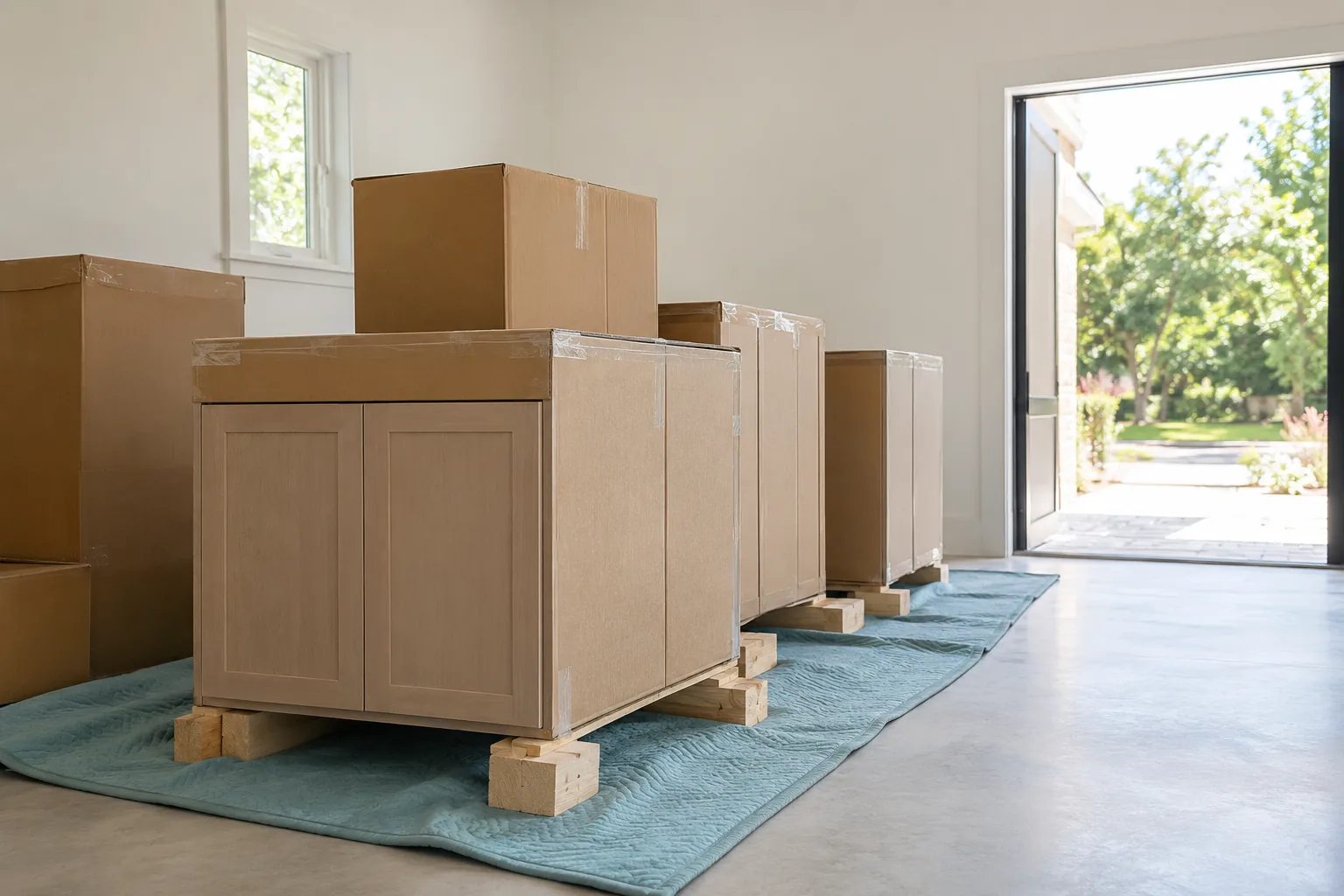
Name the receiving destination and contact for each release. Ask the seller to define its handoff and provide applicable package information. Have responsible property parties assess the actual route and storage instructions, without assuming a project label explains access.
Give the receiver a list based on the accepted goods, with room-type and release references. Ask the seller for its discrepancy reporting procedure and required records. Identify how a visible issue or shortage reaches the purchaser, and how a later component question from an assembler would be handled.
Keep receipt, assembly and installation separately assigned. If products are substituted, update the relevant receiving list so it does not still describe the earlier goods. Before approval, reconcile the purchaser's order, approved schedule and seller terms. A package can make a multi-room purchase easier to understand when its quantities and responsibilities are traceable. It should not make missing approvals or undefined labor less visible simply because everything is presented under one heading.
Inquiry process
From buying questions to a possible supplier quote
Sending an inquiry does not reserve products or book work.
Describe the purchase
Include project ZIP, room, approximate cabinet list and preferred timing.
Clarify requirements
Identify assembly, access, measurements and any separately arranged labor.
Confirm referral availability
An inquiry can be referred only if a suitable seller accepts the location and product request.
Review seller terms
Confirm the final drawing, itemized price, payment, delivery and return terms directly before ordering.
Illustrative product choices
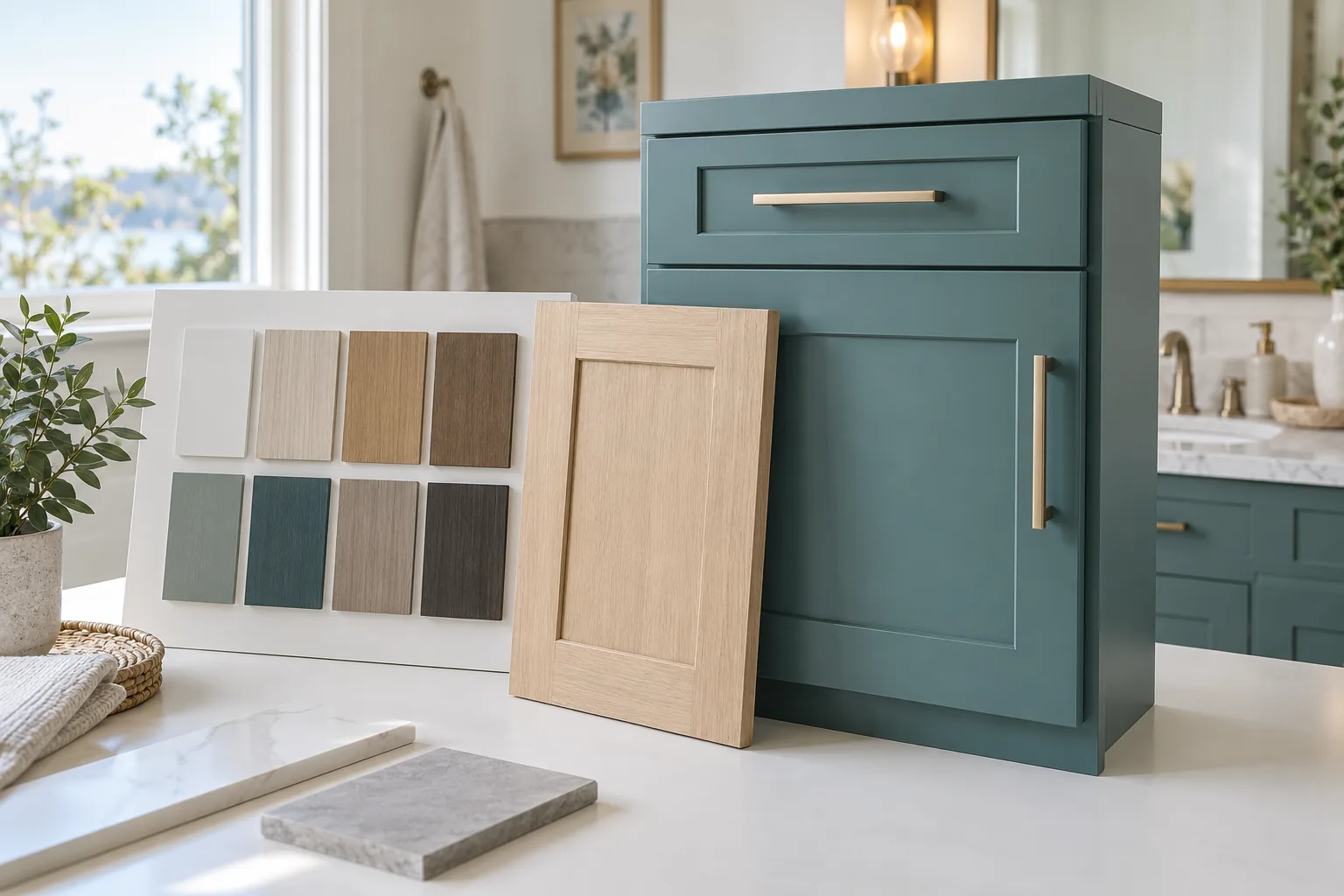
Illustrative product visualizations, not completed work, local properties or supplier facilities.
Questions
Contractor and Property Cabinet Packages: Common Questions
How do I calculate quantities for repeated but different kitchens?
Prepare a schedule for each distinct type and multiply its units by the number of that type. Preserve differences rather than averaging the cabinet count. Keep a summary that lets another person trace total quantities back to the rooms.
Does a first package quote reserve products for later phases?
No reservation is established here. Ask the actual seller whether it accepts phased purchasing and what availability, payment, storage or price terms apply. Keep future planning quantities distinct from accepted order quantities and document any commitment explicitly.
Can my project contact approve all substitutions?
Only if that authority is actually assigned. Name the people responsible for product, fit and purchasing approvals, and identify the affected revision. A general communication role does not by itself establish authority to accept changed dimensions, finish or goods.
What should the receiver use to check a release?
Provide the accepted order and current release list, tied to the room types, plus the seller's packaging and discrepancy instructions. An earlier takeoff may describe different goods. Keep changes and reporting contacts clear before the handoff.
Talk to us about contractor and property cabinet packages
Describe the purchase and project ZIP in Prince Frederick. Supplier acceptance and any referral are confirmed separately; no visit or quote is booked by this form.
Calls only, we do not receive text messages.